“Textile Recycling: Closing the Loop”
- Felice Caroline Halim
- Jun 3, 2024
- 8 min read

Introduction
As a fashion student, one of the biggest problem we always hear is the fact that the fashion industry is one of the largest polluters in the world. One that generates a staggering amount of waste each year. As a the new generation of future fashion designers, we are always pushed to first think and prioritize about the sustainability and life cycle of the garment over the aesthetic of the design. When we think of textile waste, many of the few sustainable practices that we did includes upcycling, which means transforming existing garments into new pieces without altering its original composition.
The problem is when I did upcycling projects or even in existing thrift shops where they would upcycle garments, as much interesting it is, still it only serve a small niche market of people. Many still has negative stigma of wearing old/waste garments.
As the industry continue to demand more sustainable practices to generate waste, as a designer I tend to ask myself, with all these staggering waste that we have, how can we generate it to reach a wider mass market and be more commercial? Thus I’ve come across interest in textile recycling and found that the importance of textile recycling has never been more critical. By embracing textile recycling technologies, we can close the loop in the fashion industry by reducing waste and conserve resources while promoting a circular economy.
Understanding Textile Recycling
What is Textile Recycling?
Textile recycling involves collecting, sorting, and processing old garments and fabrics into new materials. This process helps divert waste from landfills and reduces the need for virgin resources. Both natural and synthetic fibers can be recycled, though the processes vary.
Current State of Textile Waste
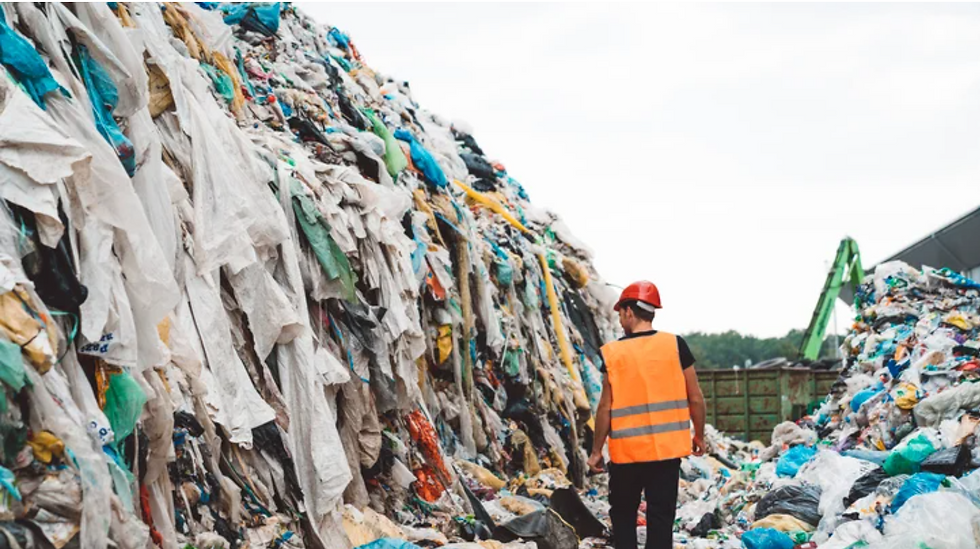
According to a 2022 study, the fashion industry ranks as the second most polluting industry in the world, following oil and gas. The UN Climate Change reports that fashion contributes approximately 10% of global greenhouse gas emissions. Globally, an estimated 92 million tons of textile waste is produced each year. Only a fraction of this is recycled, with the rest ending up in landfills or incinerated, causing significant environmental damage. Challenges in textile recycling include dealing with mixed materials, contamination, and the economic viability of recycling processes.
Global Textile Market

The textile recycling market is driven by increasing environmental concerns, the need for sustainable practices, and government initiatives focused on sustainability and landfill reduction. Key trends include advanced sorting techniques, innovations in processing textile waste, and rising consumer demand for sustainable fashion. Europe leads the industry due to stringent EU waste management regulations and high consumer environmental awareness. The market features a mix of small, specialized firms and large textile companies, with strategic alliances enhancing sustainability efforts. While technological challenges exist, particularly with blended fabrics and post-consumer waste, these also present opportunities for innovation in recycling technologies and improving recycled textile quality and efficiency.
Prominent key players in driving the Global Textile Market:
Worn again technologies
Lenzing Group
Birla Cellulose
BLS Ecotech
The Woolmark Company
iinouiio Ltd
Ecotex Group
The Boer Group
Unifi, Inc.
Textile Recycling International
Hyosung Group
Martex Fiber
RenewCell
Pistoni S.r.l.
RE TEXTIL Deutschland GmbH.
Growing market in Asia

In 2022, Europe led the textile recycling industry, accounting for 29.6% of global revenue, and is expected to see significant growth due to robust government support and numerous recycling initiatives. The Waste and Resources Action Program (WRAP), active across Europe with local government and private firm backing, promotes textile waste recycling. Key markets in Europe include Germany, Italy, France, Belgium, the Czech Republic, and Poland, with Italy recognized as a major hub for textile recycling. The Italian Textile and Recycling Association in Prato, Italy, plays a pivotal role in converting old textiles into yarn. Meanwhile, the Asia Pacific region is projected to register a CAGR of 3.8%, driven by environmental concerns, government initiatives, and the development of innovative textile recycling technologies.
Several initiatives in Asia are advancing textile recycling efforts. For instance, Singapore is set to open a pilot textile recycling plant in 2024, as part of broader investments in textile recycling capabilities. The new research center at Nanyang Technological University (NTU) will have the capacity to recycle 8,760 tonnes of fabric waste annually, equivalent to the weight of 58.4 million T-shirts. This project exemplifies the region's commitment to enhancing textile recycling technologies and capacities.

Textile Recycling Technologies
Mechanical Recycling
The mechanical recycling process involves shredding textiles into fibers, which are then re-spun into yarns. This method is suitable for natural fibers like cotton and wool. The recycled fibers can be used in various applications, such as insulation materials or new fabrics. However, the quality of mechanically recycled fibers may degrade with each recycling cycle.
Chemical Recycling
Chemical recycling breaks down fibers into their chemical components, which can then be reconstituted into new fibers. This method is particularly effective for synthetic fibers like polyester and nylon. The advantage of chemical recycling is its ability to handle mixed-fiber textiles and produce high-quality recycled fibers. Companies like Worn Again Technologies and Carbios are at the forefront of developing chemical recycling solutions.
Biological Recycling
Biological recycling is an emerging method that uses enzymes to break down natural fibers or bacteria to decompose synthetic fibers. This innovative approach offers the potential for a fully circular textile economy, though it is still in the experimental stages. The future of biological recycling looks promising as research continues to advance.
Challenges
Textile recycling involves destroying of textile waste to create new recycled fabrics. This process would need more energy which may lead to additional environmental consequences, not to mention the need to use chemicals to cleanse the waste fabrics. Furthermore, many modern textiles are mostly a blend of natural and synthetic fibers, these blend need to be separated and the complexity makes the recycling proses difficult with the different properties within the fibers.
Clothing recycling faces numerous challenges, with only about 1% of old textiles being recycled into new garments, according to the Ellen MacArthur Foundation. In Denmark, this rate is slightly higher at 6%, yet it remains significantly lower than the recycling rates for other materials like plastic packaging. One major issue is that old garments often have missing or faded content tags, complicating the identification of fibers. Additionally, fiber blends in clothing are difficult to separate for proper recycling, as noted by The Sustainable Fashion Forum.
Innovations and Case Studies
Brands Leading the Way
Textile recycling initiatives have begun to significantly reshape the fashion industry, turning waste into a valuable resource and promoting sustainability. Notable projects like H&M’s Garment Collecting program and Adidas’s collaboration with Parley for the Oceans exemplify this transformation. H&M collects unwanted garments from customers, repurposing them into new fabrics, while Adidas transforms ocean plastic into high-performance sportswear. Similarly, innovative companies like Evrnu are developing regenerative fiber technologies that convert post-consumer textile waste into new, high-quality materials. These advancements not only reduce landfill waste and environmental impact but also inspire a circular economy model in fashion. By closing the loop on textile production, these projects demonstrate a path forward for the industry, encouraging sustainable practices, reducing resource consumption, and fostering a new era of eco-conscious fashion. The textile recycling awareness has grown even in smaller brands locally, many brand has also join hands to install textile recycling bins in our surroundings. Have you spotted any bins before?
Cutting-Edge Technologies
The Rescue! Project, funded by the EU, is focused on developing sustainable recycling solutions for textiles. This initiative aims to create a closed-loop system where textiles can be continuously recycled without losing quality. Another innovative approach is TextileGenesis, which uses blockchain technology to trace the lifecycle of recycled textiles, ensuring transparency and accountability in the supply chain.
To tackle many challenges in recycling textiiles, researchers from Aarhus University in Denmark, as reported in the Green Chemistry journal, have developed a new technology that could significantly enhance garment recycling rates. This innovation focuses on removing elastane from nylon, a common fabric blend in clothing such as leggings, activewear, shapewear, and swimwear. Elastane has been particularly challenging to separate from other materials, but this new technology offers a promising solution to improve the recycling process for these types of garments.
"The many links in the elastane chain are bound together by a small molecule called a diamine. By heating the clothes to 225 degrees celsius and adding a specific alcohol, we have found a method to break down the bonds in elastane. When this happens, the chains fall apart and the materials separate,” explained Steffan Kvist Kristensen, an assistant processor at the Interdisciplinary Nanoscience Center at Aarhus University.
Successful Projects
Deeper research, I found some interesting successful innovations I'd like to share with us all by BASF, a multinational European chemical company that creates chemicals for sustainable future.

The first polyamide 6 (PA6, also known as nylon 6) to the market that is entirely based on textile waste via a segregated production. Inditex has made a jacket exclusively from loopamid

Mass-balanced product that supports the use of alternative raw materials from the chemical recycling of plastic waste that is difficult to recycle, such as end-of-life tires.
Certified Sustainable FiberMax® Cotton (CSF) with a traceable blockchain platform

BASF, in collaboration with CSF partners, all within a 250 kilometers (155 mile) radius in Greece, has introduced a highly transparent and traceable blockchain platform from Seed 2 Sew. The platform, technology by Bext 360° and powered by Hyperledger, allows brands to seamlessly integrate interesting data such as carbon footprint, into their supply chains through an Application Programming Interface (API).
Reflection & Conclusion
There’s always challenges when working towards a sustainable future. I still believe the future of textile recycling is convincing to generate textile wastes as much as the challenges showed might pose some difficulties but it doesn’t sound impossible to tackle them as there’s many solutions to it; green energy, harmless chemicals, etc.
The future of textile recycling is bright, with advancements in technology paving the way for a more sustainable fashion industry, I am excited to see new textile recycling innovations to come. By embracing innovative recycling methods and supporting policies that promote a circular economy, we can significantly reduce textile waste and its environmental impact. Consumers, brands, and governments all have a role to play in closing the loop and fostering a sustainable future for fashion.
References
Abdulla, H. (2023, March 20). Week in review: Tackling textile waste - the gift that keeps giving - Just style. Just Style. https://www.just-style.com/news/week-in-review-tackling-textile-waste-the-gift-that-keeps-giving/
Bailey, K., Basu, A., & Sharma, S. (2022). The Environmental Impacts of Fast Fashion on Water Quality: A Systematic Review. https://www.mdpi.com/2073-4441/14/7/1073#:~:text=The%20fashion%20industry%20is%20the,greenhouse%20gas%20emissions%20by%202030
BASF. (2024, April 18). BASF at Techtextil 2024: Shaping the future of the textile industry with sustainable solutions. BASF – United States. https://www.basf.com/global/en/media/news-releases/2024/04/p-24-181.html
Grand View Research. (2023). Textile recycling market size & share [2023 global report]. Market Research Reports & Consulting | Grand View Research, Inc. https://www.grandviewresearch.com/industry-analysis/textile-recycling-market-report
Imarc. (2024). Textile recycling market size, share analysis report, 2032. Market Research Company, Reports and Consulting Services | IMARC. https://www.imarcgroup.com/textile-recycling-market#:~:text=Key%20Market%20Trends%3A%20One%20of,and%20demand%20for%20sustainable%20fashion
Johansen, M. B., Donslund, B. S., Henriksen, M. L., Kristensen, S. K., & Skrydstrup, T. (2023). Selective chemical disassembly of elastane fibres and polyurethane coatings in textiles. Green Chemistry, (24).
Soh, G. (2022, August 5). New research centre and future recycling plant mark S'pore's first attempt at recycling used textiles. The Straits Times. https://www.straitstimes.com/singapore/environment/new-textile-research-centre-launched-to-develop-recycling-techniques-for-new-textile-recycling-plant-here-in-2024
United Nations. (2018, September 6). UN helps fashion industry shift to low carbon | UNFCCC. https://unfccc.int/news/un-helps-fashion-industry-shift-to-low-carbon#:~:text=UNFCCC%20Nav&text=The%20fashion%20industry%2C%20including%20the,aviation%20and%20shipping%20industry%20combined
Additional Resources
- Further Reading: [Global Fashion Agenda: Pulse of the Fashion Industry Report](https://www.globalfashionagenda.com)
What are your thoughts on textile recycling? Do you think recycled textiles would be the textile of the future? Share your views and perspectives in the comments below!


Comments